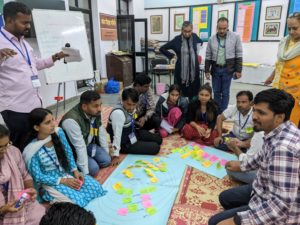
Yes To Access Project
Background
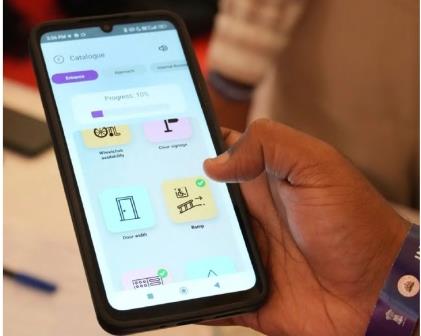
The Yes To Access (YTA) App was launched in India about six months ago and has since gained around 9,000 users (as of July 2025). This free smartphone app enables individuals to conduct accessibility audits by photographing key areas such as entrances, stairs, ramps, and toilets. Using AI-based analysis, the app automatically evaluates features like ramp slope and doorway width and shares the data through Google Maps. This makes it a practical tool for both advocacy and daily route planning.
Srinivasan has been leading the campaign’s volunteer mobilization efforts. His team is committed to expanding the YTA campaign throughout India and potentially to other countries. While technical and budgetary challenges exist in activating the YTA App outside India, this may become feasible if strong demand is identified.
To explore the possibility of introducing the YTA campaign in other Asian countries, Srinivasan reached out to AHI to discuss potential collaboration with social workers addressing a range of issues.
In response, AHI sought the support of the Centre for Disability in Development (CDD) in Bangladesh. Salam and Jahangir from CDD kindly agreed to help plan and facilitate an online workshop as a first step toward exploring this collaboration.
Step 1. WORKSHOP (July 5, 2025)
Title
Fostering Inclusive Participation in Social Audits Through Digital Tools ―A New Initiative from India with Wider Relevance―
Date and Time
July 5 (Sat), 2025 10:00-12:00 India, 10:30-12:30 Bangladesh, 13:30-15:30 Japan
Presenter
Mr. Srinivasan Natchathiram (ILDC2010) Yes to Access, Association of People with Disability (APD), India
Moderator
Mr. Syed Abdus Salam (ILDC2023), Mr. Md. Jahangir Alam (ILDC2016)
Centre for Disability in Development (CDD), Bangladesh
Coordinator
Ms. Yayoi Takada Asian Health Institute (AHI), Japan
Number of participants
46 from 13 countries (out of 87 registrations)
Opening Remarks and Purpose
Yayoi from AHI, opened the workshop by introducing AHI’s mission to promote health equity through participatory learning and networking. She shared that the workshop aligns with AHI’s current focus on community initiatives and practical tools.
She also briefly explained social audits as community-led reviews of public services, and introduced the presenter, Srinivasan.
Presentation Summary and Key Questions & Answers
PART I: Disability and Accessibility
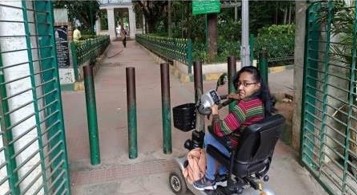
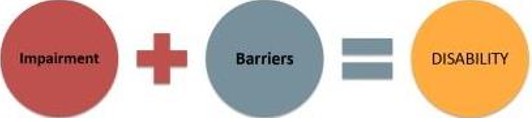
Srinivasan began his presentation by challenging the common perception of disability. Using real-life examples and images, he explained that disability is not just about a person’s impairment, but it is the result of impairment plus barriers in the environment. These barriers can be physical, social, attitudinal, cultural, institutional, or legal, and they limit participation and inclusion.
Srinivasan emphasized that accessibility is not just about ramps or buildings, but also includes:
- Digital accessibility (websites, apps, communication platforms)
- Mobility accessibility (transport, stations, airports)
- Accessible services (education, employment, healthcare)
He highlighted that inaccessible environments cause people to drop out of school, lose jobs, and be excluded from daily life, not because of their disability, but because of society’s failure to accommodate their needs.
He stressed that:
- Accessibility is a fundamental right.
- It promotes self-esteem, dignity, and inclusion.
- Making environments accessible benefits not only persons with disabilities, but also older people, pregnant women, parents with small children, and others with mobility limitations.
Using statistics, he argued that nearly 48% of the population in India, including persons with disabilities and older adults, could benefit from improved accessibility. He urged decision-makers to consider accessibility as a necessity for all, not just a small minority.
Q: What is the difference between accessibility and reasonable accommodation?
A: Accessibility is about making environments, services, and information usable for everyone from the start. It is usually permanent.
Reasonable accommodation means making specific adjustments for a particular person’s needs, and it can be temporary or case-by-case.
Q: What is the difference between accessibility and universal design?
A: Universal design is a concept or strategy to create things that are accessible to all people, regardless of age, ability, or situation. In short, universal design is a way to achieve accessibility.
PART II: Yes To Access App and Campaign
Srinivasan highlighted a major gap: the lack of reliable, accessible data on the number of public spaces that are or aren’t accessible in many countries, including India. Although India has legal frameworks like the Rights of Persons with Disabilities Act (2016) and the Accessible India Campaign (Sugamya Bharat Abhiyan), progress in improving accessibility remains slow and uncoordinated. Access audits are often done manually, and the results stay locked away in government files without public access.
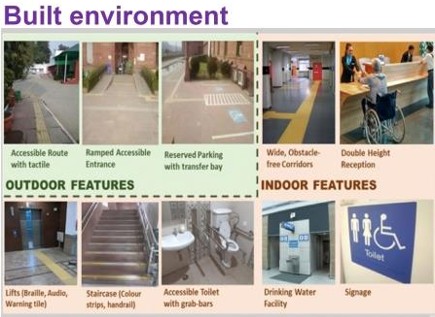
To address this, APD developed the Yes to Access (YTA) App, a smartphone-based tool designed to assess and map the accessibility of public buildings in real time. Using AI and image recognition, the app allows volunteers, without needing expert knowledge, to photograph key features such as ramps, toilets, handrails, and signage. The app automatically generates a star rating (1–5) for each location based on 29 key accessibility features. These ratings and data are publicly available via a map interface, similar to platforms like Google Maps or TripAdvisor.
In just 6 months, over 1.8 lakh (180,000) places have been audited across India by more than 9,000 volunteers. This was made possible through strategic partnerships with government departments, NGOs, schools, and community groups. The app’s data can be used in multiple ways:
- Persons with disabilities and their families can plan visits based on accessibility.
- Service providers (e.g., hotels, cinemas) can improve infrastructure to attract a broader customer base.
- Advocates and NGOs can use the data to demand policy changes or local improvements.
The YTA App is currently available only in India, but APD is open to collaborating with international partners to adapt the tool for other countries—provided there’s strong local interest, resource support, and coordination. Localization involves language translation, regulation alignment, and server infrastructure to store and manage images and data securely.
Srinivasan concluded by encouraging participants to think beyond sympathy and take action through volunteering, auditing, data-sharing, and community mobilization. “Only by involving ordinary citizens,” he emphasized, “can we make our communities truly inclusive.”
Q: Is the YTA App available outside India, or can it be used without an Indian mobile number?
A: Currently, the app is only available in India and requires an Indian mobile number for registration. However, with strong local interest and collaboration, it may be possible to adapt and activate the app in other countries. Localization would involve translation, regulatory alignment, and technical infrastructure support.
Q: What makes this app different from similar ones globally?
A: The YTA App uses AI to analyze usability features—such as ramp gradient and doorway width—based on photographs. This combines user input with image-based verification, generating star ratings and making the results publicly available via a map interface, like Google Maps.
Q: Is the app free to use?
A: Yes, the app and all its functions are completely free.
Q: What kind of locations does the app audit? Does it cover streets or routes as well?
A: The app audits built environments, such as entrances, toilets, handrails, and signage—but does not cover street-level or route-based accessibility.
Q: Can users re-audit a location that’s already been assessed?
A: Yes, re-audits are encouraged to update information and reflect changes over time, helping to improve data accuracy.
Q: Can individuals receive a detailed accessibility report for a specific place?
A: The app does not automatically generate downloadable detailed reports. However, the YTA team can provide raw or analyzed data upon request, especially if the user conducted the audit using an organizational coupon code.
Q: Can an organization track how many audits its members conducted?
A: Yes. Each organization can be assigned a coupon code. This enables tracking and reporting of audit data linked to that organization.
Q: Who analyzes the data and supports advocacy work?
A: The app team includes data analysts who can share raw or summarized data upon request. However, advocacy based on the findings is expected to be carried out by volunteers or partner organizations.
Q: Is there a demo or training video available to learn how to use the app?
A: Yes, a 6-minute demo video explains how to register, conduct audits, and explore the results on the map. [YouTube link: https://www.youtube.com/watch?v=NZ74P13xIng]
Q: How long will the app remain functional, and who manages data storage?
A: APD is seeking donors and strategic partners to support the long-term maintenance, development, and data storage of the YTA App. Sustainability planning is underway.
Closing Remarks
The workshop concluded by emphasizing how technology, when combined with community involvement, can effectively promote accessibility and inclusion through the generation of reliable, publicly accessible data. Participants were encouraged to actively engage in creating inclusive communities through volunteering, advocacy, and awareness-raising efforts.
Step 2. Initial Exploration of Collaboration (Since July 2025 ―Ongoing)
Through feedback and follow-up communication after the workshop, several participants showed strong interest in launching the Yes To Access (YTA) App in their areas.
Srinivasan and his team will follow up with them to explore collaboration.
India
- The National Institute for Persons with Multiple Disabilities (NIEPMD), Tamil Nadu – likely to collaborate.
- Prayas, the JSA Rajasthan state convener – may discuss the possibility of supporting the YTA campaign.
- SATHI, the JSA Maharashtra state convener – may also discuss the possibility of supporting the campaign.
Bangladesh
- Centre for Disability in Development (CDD)
Salam (ILDC 2023) and Jahangir (ILDC 2016) have discussed with the management of CDD, and agreed that the YTA App could be a useful tool for collecting data to support evidence-based advocacy to improve accessibility in the built environment. They plan to work in collaboration with their partner Disabled People’s Organizations (DPOs) and local NGOs. As a first step, they will check how well the app complies with local policies and regulations.
- The following NGOs that joined the workshop may also join the initiative.
- Doctor Baker’s Organization for Well-Being (DBOWB) in Tangail District
- Pulse Bangladesh Society in Cox’s Bazar District
Other Potential Collaborations
Srinivasan and his team will continue exploring collaboration in Bhutan and Pakistan through the following contacts:
- The Disabled People’s Organization Bhutan (DPOB)
- The All Sanghar Handicaps’ Association (ASHA) in Pakistan
- Asian Health Institute (AHI) in Japan
AHI will look for the organizations that may be interested in using the YTA App after mid-October. They believe the YTA campaign in Japan should reflect the local context by addressing the needs of people with small children and elderly. while also following universal design guidelines.
Points to Consider for International Collaboration (Identified by the APD Team)
Technical Readiness
– Cloud infrastructure setup in each region
– Localization of UI/UX and language support
– Region-specific databases and map APIs
– Compliance with local data laws (e.g., APPI in Japan)
Operational Planning
– Legal entity registration if required
– Volunteer and partner onboarding strategies
– Pilot program design for initial rollout
– Infrastructure for region-specific support and training
Community Engagement
– Tailored outreach through local platforms (e.g. LINE, WhatsApp)
– Collaboration with local NGOs
– Development of feedback channels and inclusive design workshops
Financial Planning
– Estimating one-time and recurring costs (e.g. hosting, localization, marketing)
– Contingency budgeting
– Identifying funding opportunities and partnerships
Risk Management
– Data protection audits
– Localization quality control
– Operational stability during phased rollout
– Pilot-based feedback loop to address early-stage risks
Implementation Roadmap
– Define phases for setup, pilot, and scale-up
– Develop success indicators for each stage
– Plan for feedback-driven enhancements over time
- Categories
- Learning Community